

Shifting Perspectives of Nature Play
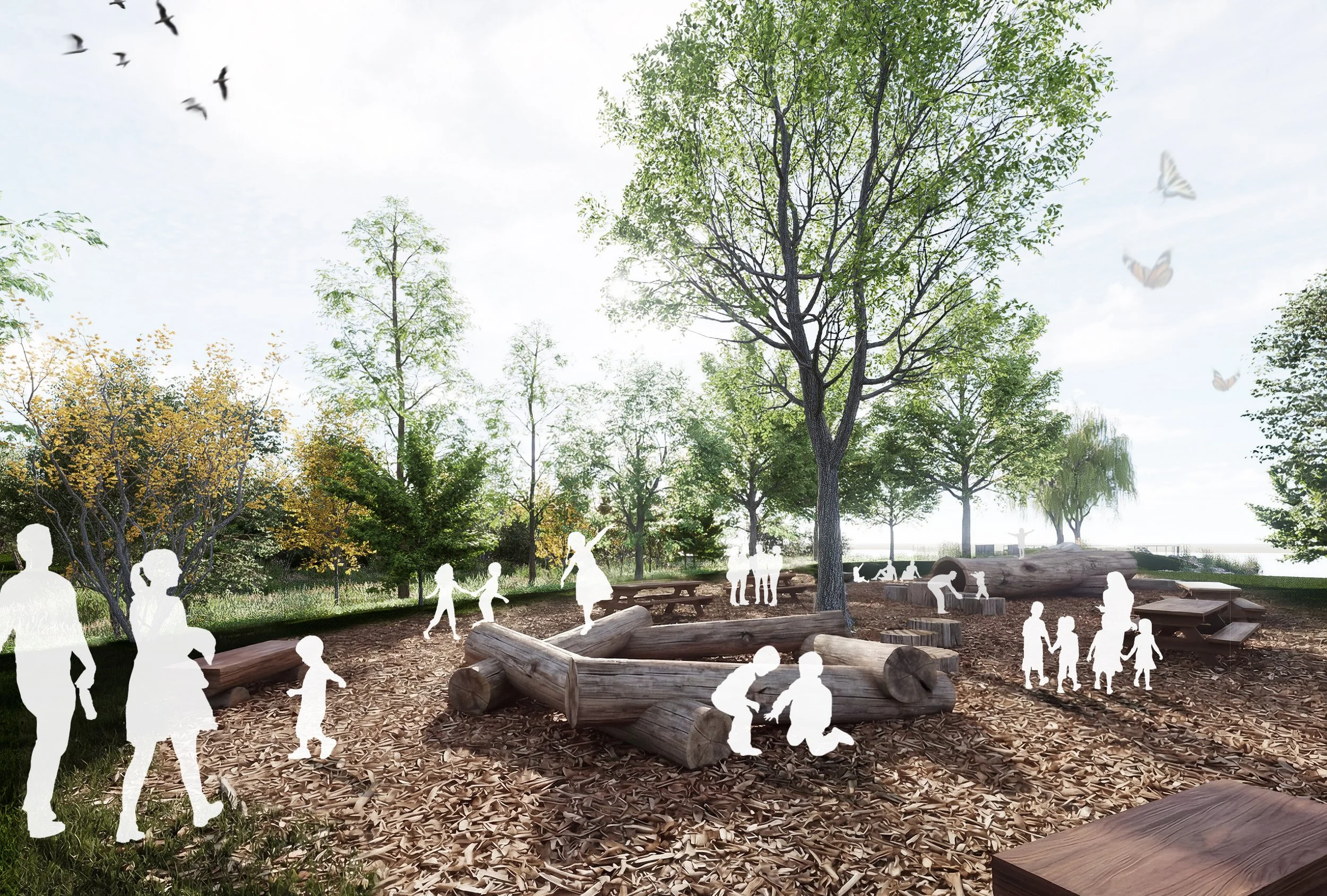
What does it mean to “know” about nature while having little to no physical connection with it? To grow up without digging in the dirt, building forts from gathered sticks, picking flowers, or skipping stones across the water. This disconnect is often described as “nature deficit disorder”- the physical and emotional consequences of a life removed from the natural world. Today’s youth are immersed in technology, but increasingly deprived of nature’s touch, beauty, and challenges.
As landscape architects, we shape spaces where children play, and we know that children learn through play. This gives us the opportunity to reimagine play spaces as outdoor classrooms where learning happens through interaction with wood, rocks, plants, soil, and water.
Our field is already seeking to restore natural systems affected by soil degradation, biodiversity loss, flooding, and rising temperatures through nature-based design. Extending these strategies to play environments is a natural next step.
There is a strong precedent for this approach. Educational models such as Waldorf and Forest Schools have centered outdoor, nature-based play in their curricula. However, these programs are often limited in access. Public playgrounds and parks, by contrast, are open to all, offering a more equitable and accessible platform for mature-based play and social interaction.
We are excited to bring these ideas to life in our Waterfront Resiliency Park in Hudson, NY, where nature-based solutions and play come together to create an inclusive play area for the community.