

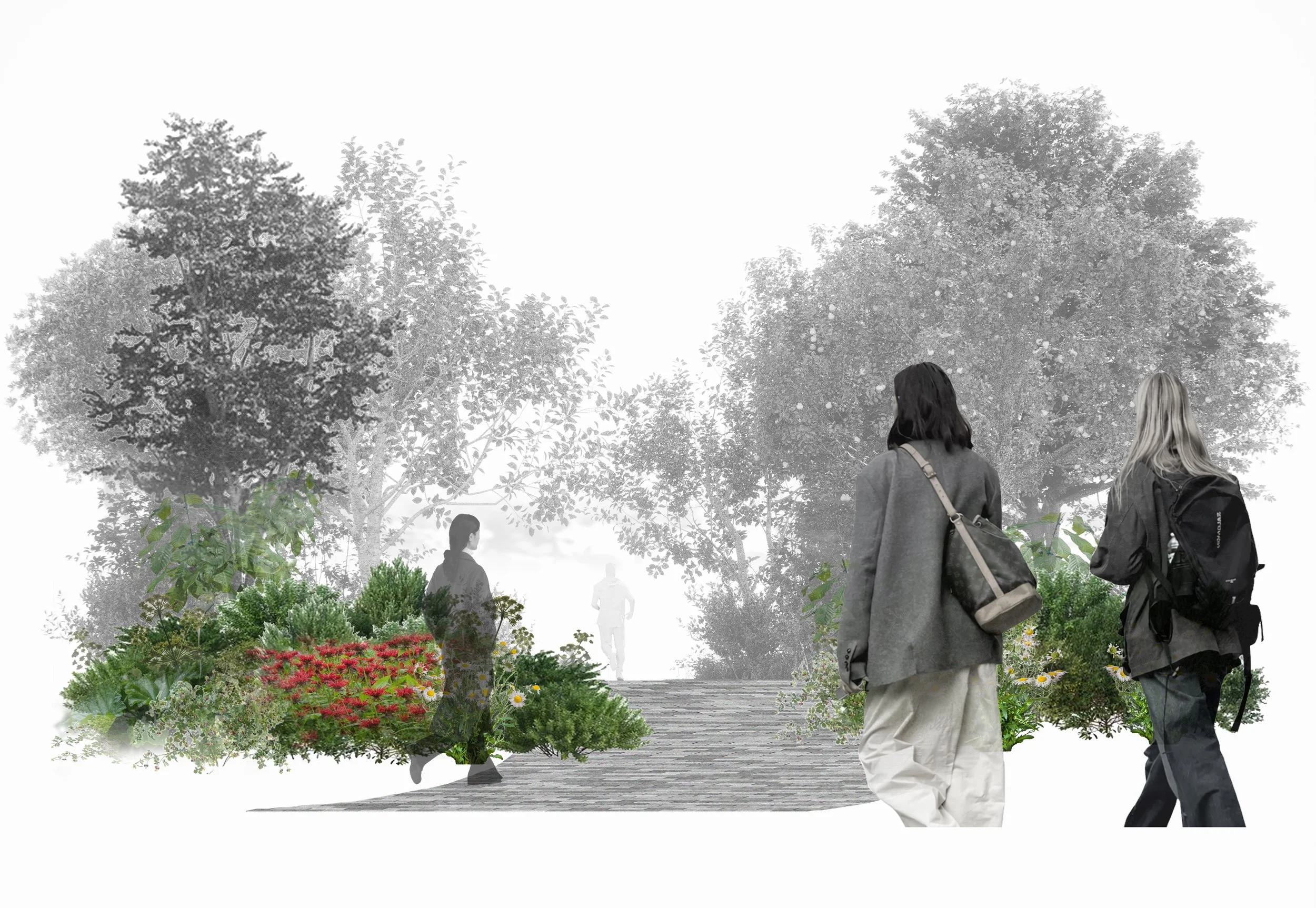
Urban perennial food forests show what’s possible when ecology and community come together. They offer a practical and hopeful model for cities seeking healthier ecosystems, resilient food systems, and more livable neighborhoods. By mimicking the forest structure with layered plantings of trees, shrubs, herbs, vines, and groundcovers, food forests can transform underused urban land into productive landscapes that provide food, urban greenspace, and foster community stewardship. Depending on their scale and species composition, some food forests require less yearly input than that of more standard community garden structures that plant annual crops.
Once established, perennial systems build soil organic matter, improve water infiltration, and reduce erosion, which is especially valuable in cities facing heavier rainfall and aging infrastructure. Deep rooted plants help manage stormwater, while diverse plant communities support pollinators and beneficial insects, strengthening urban biodiversity. In cold climate regions such as the Northeast and Midwest, food forests can be designed with hardy species adapted to USDA zones 4 to 7, making them reliable even under shifting climate conditions.
Beyond their ecological benefits, urban food forests meet important social needs. They can increase access to fresh fruit and perennial vegetables in neighborhoods with limited grocery options, reduce long term maintenance costs for municipalities, and create green spaces that improve mental health and community connection.
When designed with attention to soil, sunlight, wind, and water access, these systems can thrive even on challenging sites. Over time, perennial food forests become living infrastructure that produces food, stores carbon, cools cities, and reconnects people with seasonal cycles in a way that is both practical and deeply regenerative!